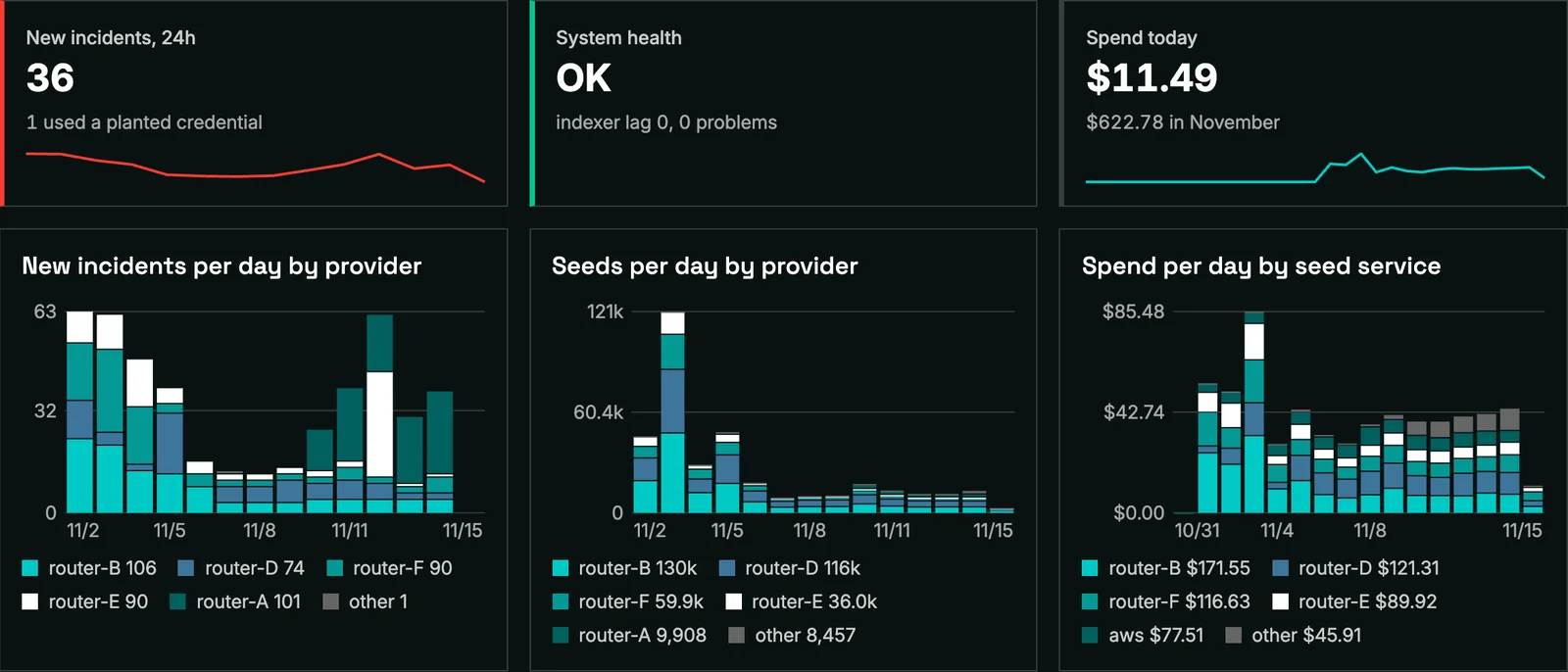
Moore, who created the Metasploit penetration testing framework and joined Dragos when it bought his company runZero in September, published the results on 19 November. The prompts carried real AWS keys to empty, fully logged accounts, unique links and passwords. Any use of one meant someone along the chain had seen the prompt.
Zero Data Retention is supposed to mean something. In practice, these prompts were retained, shared with other companies, and read by people.
 HD MooreChief research officer, Dragos; creator of MetasploitDragos blog, November 19, 2026
Breaches and resellers
Attackers were stealing data from three hosting providers, in one case since mid-July, and none of the three knew until Dragos told them. At the largest, every request sent in a few windows of late October was stolen, even ones rejected before a model ran. At the other two, some stolen requests carried the zero retention flag. The keys were tested, some within hours, and used for tens of thousands of AWS calls.
Resellers on an inference marketplace needed no break-in: they listed a model at the lowest price, switched on request logging and waited. A day and a half after two prompts went through one seller, someone on a home connection opened both secret links and started guessing user names.
Zero retention in practice
The Chinese lab’s scraper usually came two or three days after a request, also for prompts sent to US hosts that resell its models. One large US provider crawled a secret link more than two months after a single search request. A link from another prompt with the zero retention flag was posted in a Feishu work chat 24 days later and opened from three desktops and three phones in Beijing and Shanghai within two minutes.
The notice from OpenRouter
An email OpenRouter sent customers on 21 November, posted on Hacker News and reported by Ars Technica, says a security researcher placed unique test URLs in prompts sent to MiniMax models from July to October. A third party opened them 40 to 130 hours later, whether MiniMax served a request or AtlasCloud, Novita or StreamLake forwarded it. OpenRouter removed the Zero Data Retention label from those endpoints while it investigates. By the email’s account, MiniMax told StreamLake that content moderation was on before 22 October and zero retention since. MiniMax has not given OpenRouter its own account or commented in public. The email does not name the researcher.
Moore advises hosting models yourself where you can afford it, otherwise using one first-tier provider directly, and seeding your own canaries. The big providers’ own assistants and their prices are on the hub’s tools page.