Nvidia reinstates Jensen Huang as CEO six days after ruling out his return

Nvidia's board voted unanimously to bring its co-founder back as president, CEO and director, effective 23 November 2026. On 17 November its chair had said the board did not intend to reinstate him.

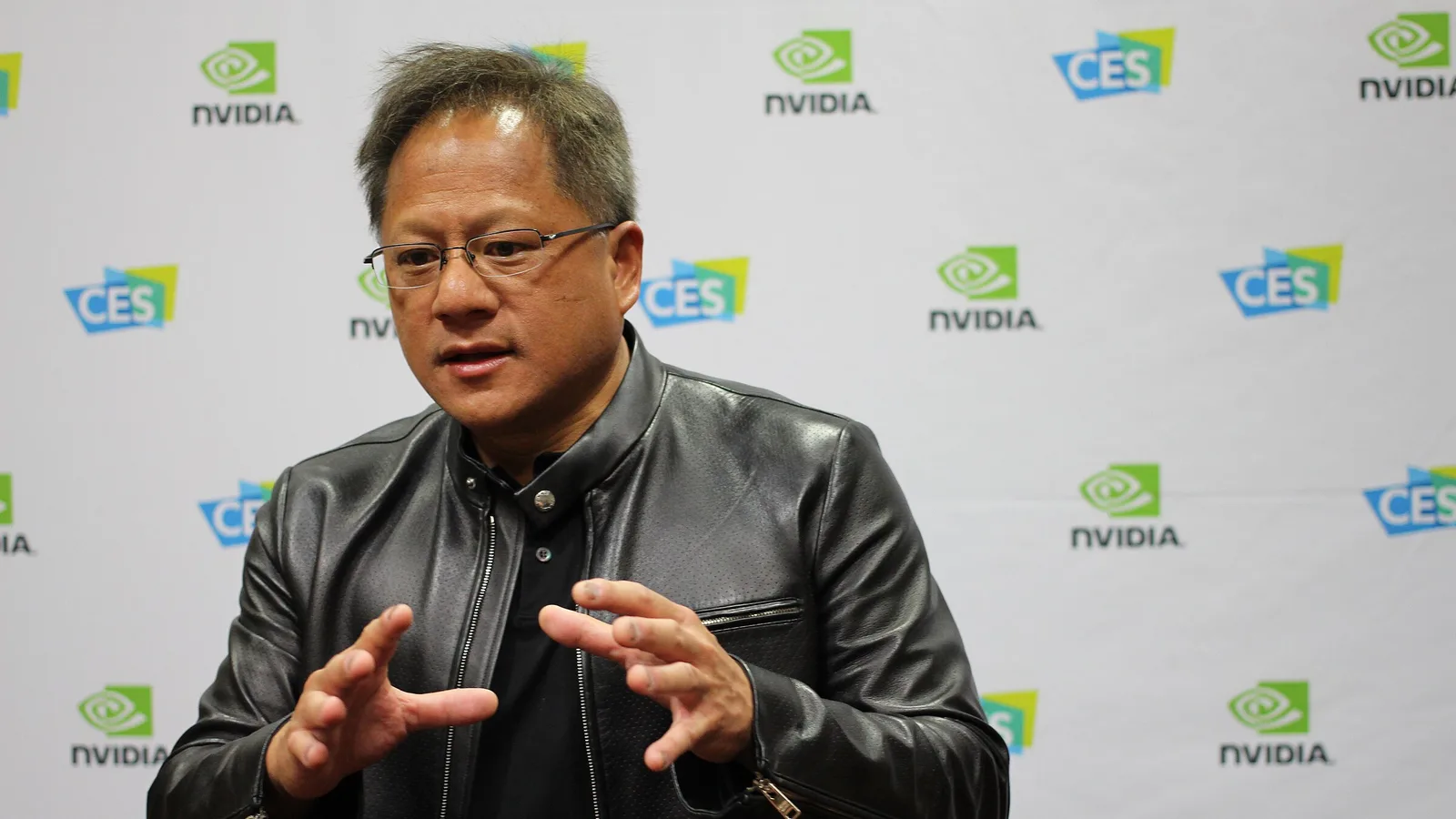
Jensen Huang in a black leather jacket speaking in front of an NVIDIA and CES backdrop at CES 2017 in Las Vegas
Photo: Maurizio Pesce, CC BY 2.0
In this material
  1. From resignation to reinstatement
  2. What is still open

Nvidia announced on Monday, 23 November, that Jensen Huang is once more its president and chief executive and a member of its board, effective immediately. Huang co-founded the company in 1993 and left it on 12 November. The board voted unanimously after “a series of discussions and meetings” with him and says it is satisfied with his candor and his ability to lead. It also received input from senior levels of the United States government, and on that basis it is confident that his reinstatement “poses no national security risk”.

“I am honored to return to NVIDIA and lead one of the most consequential technology companies in the world at the beginning of a new industrial revolution,” Huang said in the company’s release. He ended the statement with: “I can’t wait to get back to work.”

From resignation to reinstatement

On 12 November the board announced that Huang had resigned as president, CEO and director. Colette Kress, the chief financial officer since 2013, became interim CEO, and Harvey C. Jones, a former head of Synopsys, the board’s first chair.

Huang broke his silence on X on 17 November. He wrote that he “did not live up to the standards expected of everyone at NVIDIA”, admitted “serious mistakes” in his personal life and promised to cooperate with the board’s investigation. Then he answered the employees, investors and partners calling for his return: “If the Board of Directors decides that my return is in the best interest of our shareholders, our employees, the company, and America, I would be honored to answer these calls and return as CEO.”

An open letter for his return had more than 170,000 signatures by then, Fortune reported, and Epic Games chief Tim Sweeney was among its backers. That evening Nvidia reported quarterly revenue of $115.8 billion, up 103% from a year earlier, and Jones used the earnings call to close the door: “The NVIDIA board unanimously accepted his resignation and does not intend to reinstate Jensen as CEO.”

Six days later, in Monday’s release, Jones said the opposite: “The Board believes Jensen is the right person to lead NVIDIA, and that his reinstatement is in the best interests of our stockholders, employees, partners and customers.” He stays chair, and Kress stays chief financial officer.

What is still open

After reports that Huang had been “the target of a foreign intelligence effort”, the board set up a committee of independent directors, which hired independent counsel. That inquiry “will proceed to conclusion”, the board says, and Huang supports it. The board has also formed a National Security and Export Control Committee, and Nvidia has started a search for a new chief compliance officer.

Nvidia shares were up more than 27% in premarket trading on Monday, according to CNBC. On 12 November, the day Huang’s exit was announced, they had closed 4.3% lower.

From the pulse

All news →
  1. Law

    California's attorney general subpoenas Nvidia over Jensen Huang's ties with China

    Rob Bonta's office is investigating whether actions of Nvidia or its former CEO resulted in China obtaining advanced chips or confidential information, and whether the company misled investors about that risk. The SEC is said to be opening a civil probe of Nvidia's disclosures as well, TechCrunch reports; the report gives no comment from Nvidia.

    Source: techcrunch.com

  2. Business

    Nvidia reports $115.8 billion in quarterly revenue; its board will not bring back Huang

    Revenue for the quarter to 25 October rose 103% from a year earlier, $107.6 billion of it from data centres, and the outlook of $130 billion for the next quarter assumes no data centre compute revenue from China. On the earnings call board chair Harvey Jones said the board does not intend to reinstate Jensen Huang as CEO; hours earlier Huang had written that he would be honoured to return if the board decided so. The search for a permanent CEO has no date.

    Sources: investor.nvidia.com, engadget.com

  3. Business

    Jensen Huang resigns as Nvidia CEO; CFO Colette Kress leads the company for now

    Huang gave up the post on the night of 11 November, days after the Financial Times reported a relationship with a woman US intelligence believes worked for China; he admitted an affair in a message to employees on 8 November. The board has opened an independent investigation; allies lobbied for his return, the FT reported, but on 17 November the board said it does not intend to reinstate him.

    Sources: techcrunch.com, arstechnica.com, engadget.com

More in this section

All materials →
News

Jakub Pachocki publishes OpenAI's perplexity figures and proposes common AI limits

In an essay of 22 November, OpenAI's chief scientist gives log-perplexity scores of the company's models since GPT-3.5, measured on an internal dataset, and proposes limits that developers would commit not to cross until monitoring of AI behaviour catches up.

News

Riemann proof with Claude: "a historic milestone" if it checks out, "garbled" as released

Number theorists have begun to weigh Levent Alpöge's Claude-assisted proof of the Riemann hypothesis. Fields medallist James Maynard told Nature he suspects it is correct and, if it fully checks out, a historic milestone; Andrew Granville called the note Alpöge released garbled.

News

An AI coding agent leaked the key: Together AI and OpenRouter act on HD Moore's canaries

Together AI says an AI coding agent committed a credential to a public GitHub repository and an intruder used it to download stored customer prompts from June and July. On 22 November OpenRouter off-boarded three providers and took 125 endpoints off its zero-retention list.