In this material
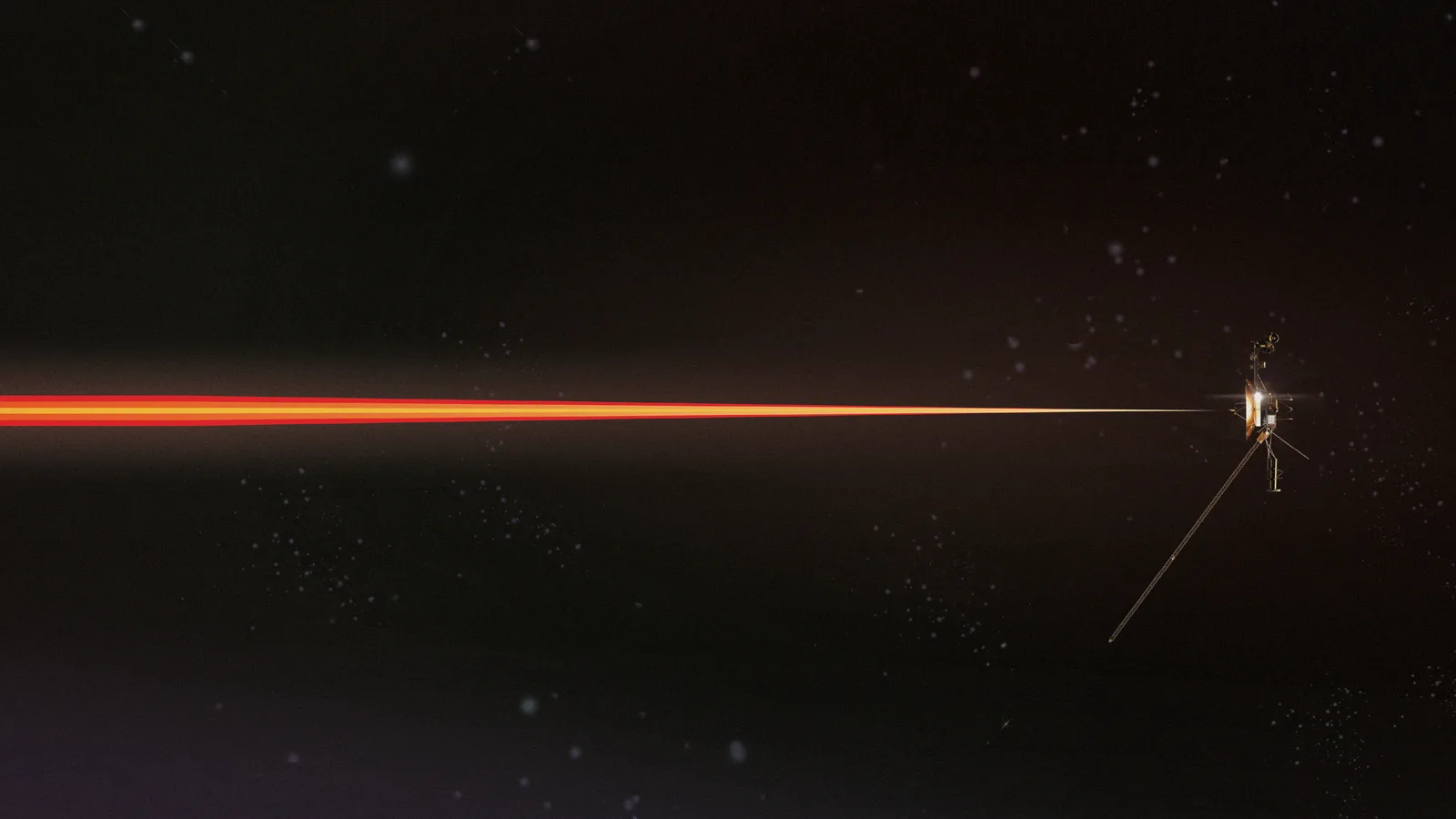
Voyager 1 passed one light-day from Earth at 2:16 a.m. Pacific time on 18 November 2026, which is 10:16 UTC. No spacecraft had gone that far before. The distance is about 25.9 billion kilometres, the length light covers in 24 hours. NASA’s Jet Propulsion Laboratory, which runs the mission, announced the milestone on 19 November.
Even traveling at the speed of light, signals now take 24 hours to reach the spacecraft and 24 hours to reach us.
 Suzanne DoddVoyager project manager, NASA JPLNASA JPL news release, November 19, 2026
Dodd said the team still listens to Voyager 1 every day and sends it commands once a week. “It just takes a little longer to communicate than it used to,” she said.
49 years on the road
Both Voyagers launched in 1977. Voyager 1 left the bubble of solar wind around the Sun in 2012, the first human-made object to reach interstellar space, and Voyager 2 followed in 2018. Voyager 1 moves at about 61,000 kilometres per hour. For scale, light reaches the Moon in about 1.3 seconds and Neptune in about four hours; to get to Voyager 1 it needs about 20 more.
Linda Spilker, the mission’s project scientist, said the probes keep changing what scientists know about the space between the stars:
One big surprise is the extent to which our Sun continues to affect interstellar space, all the way out to Voyager 1.
 Linda SpilkerVoyager project scientist, NASA JPLNASA JPL news release, November 19, 2026
A fault and a shrinking power supply
The milestone was confirmed from the carrier signal and the calculated trajectory: Voyager 1 has sent no science or engineering data since 14 November, and engineers are still working out why. Each probe loses about 4 watts of power a year, and the team has switched off three devices and moved to lower-power replacements. JPL expects both to keep their science instruments running at least until the 50th anniversaries of their launches next summer.
Voyager 2 travels more slowly and should reach one light-day in November 2035, NASA says. Dodd described what comes after the end of contact:
One day in the future, when it can no longer communicate with Earth, Voyager 1 will become humanity's silent ambassador to the stars.
Suzanne DoddVoyager project manager, NASA JPLNASA JPL news release, November 19, 2026